
An Audio Blog by Walden - Ideas & Insights on Audio & Good Sound
Diamonds Are Forever. On Phono Cartridges…
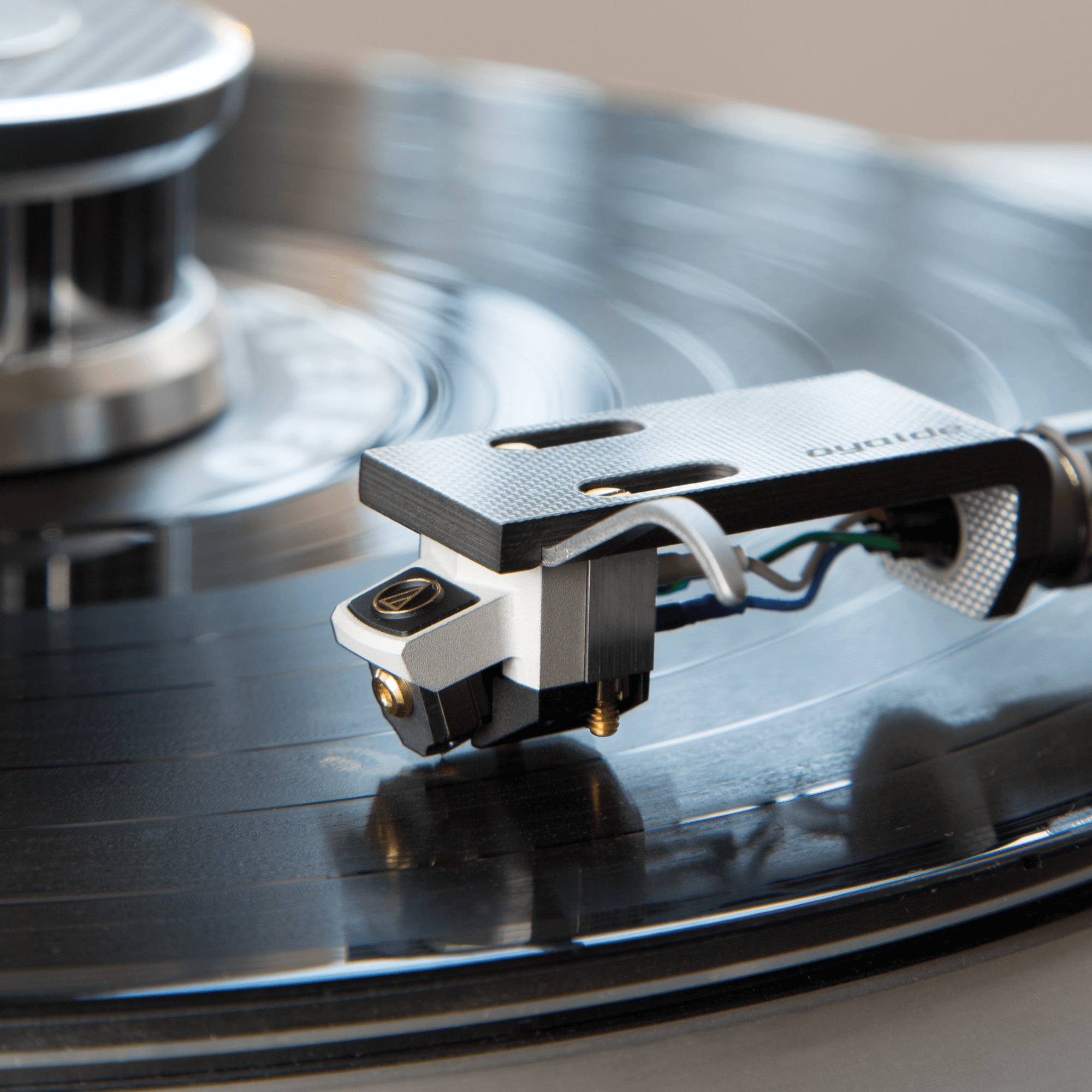
For vinyl lovers, phono cartridges hold a special status. They are miniature, often refined, and come in various shapes and qualities. Phono cartridges are literally at the source of an audio system as they are used to read the grooves in the vinyl.
For vinyl lovers, phono cartridges hold a special status. They are miniature, often refined, and come in various shapes and qualities. Phono cartridges are literally at the source of an audio system as they are used to read the grooves in the vinyl. This makes them extremely critical in determining how an audio system will sound. A good cartridge can make a mediocre system sound exceptional, and vice versa... And it all starts with a small diamond at the end of the cantilever. Some cartridges are so refined that they literally deserve the status of a jewel, irrespective of the fact that a diamond is used.
We often find ourselves pondering the intriguing question of which phono cartridges reign supreme and which ones perfectly complement a particular system. In this brief article, we aim to shed light on the first topic, though we won't cover every possible angle. As for the second question, a universal answer remains elusive, as it truly hinges on the unique audio setup and the listener’s own sound aspirations.
HANA Black Cartridge featuring a diamond stylus and cantilever
Three Ways to Generate a Signal
Among modern cartridges, three main generator principles dominate: Moving Magnet (MM), Moving Coil (MC), and Moving Permalloy (MP). Each approaches the same task in a slightly different way.
At the heart of every cartridge lies a simple principle: the stylus must convert microscopic groove movements into a tiny electrical signal that represents the music cut into the record.
The difference between the three cartridge families lies mainly in which part of the generator moves.
Motor of an Audio-Technica 700-series MM cartridge
Moving Magnet (MM)
In a moving magnet cartridge, a small magnet is attached to the cantilever. As the stylus moves through the groove, this magnet moves inside fixed coils, generating the signal.
The advantages are largely practical:
relatively high output voltage
compatibility with most standard phono stages
typically replaceable styli
MM cartridges generally deliver a relatively high output voltage, making them easy to integrate into an audio system. Most amplifiers with a built-in phono stage are designed primarily for moving magnet playback, offering straightforward compatibility for vinyl enthusiasts. Of course, there are notable exceptions, such as amplifiers from LUXMAN, which provide the flexibility to handle both MM and MC signals, catering to a wider range of cartridge types and listening preferences.
MM cartridges are typically found at the lower end of the phono cartridge spectrum. This is largely because they are easier to manufacture than moving coil cartridges (which we’ll explore in more detail later). However, there are MM designs that reach a remarkably high level of refinement, incorporating technologies usually reserved for high-end moving coil models.
Audio-Technica AT-VM760SLC MM cartridge featuring a special line contact shaped diamond on a boron cantilever
For instance, Audio-Technica has developed MM cartridges within its 700 series that feature boron cantilevers, paired with advanced stylus profiles such as MicroLine, Shibata, and even the Special Line Contact diamond cut, i.e. an innovation the company created for its top-tier cartridges.
These cartridges demonstrate that even within the MM category, advanced stylus geometries and high-precision engineering can deliver remarkable performance.
In other words, cartridge quality is not determined by the generator principle alone.
Moving Coil (MC)
In a moving coil cartridge, the roles are reversed. Instead of a magnet moving, tiny coils attached to the cantilever move within a fixed magnetic field.
Because these coils can be made extremely small and lightweight, the moving mass of the system is reduced.
As a result, the lower moving mass can translate into:
faster transient response
improved tracking of subtle groove modulations
greater retrieval of low-level detail
Motor of the Audio-Technica ART-20 MC phono cartridge
Moving coil cartridges are often capable of delivering an even more refined sound, with a deeper soundstage and, quite simply, a greater sense of “magic.” As mentioned earlier, they are significantly more difficult to manufacture, partly because a minuscule coil must be mounted at the very tip of the cantilever with extreme precision. In addition, more expensive components are typically used in high-end moving coil cartridges, simply because their greater performance potential justifies it.
One important characteristic of moving coil cartridges that should not be overlooked is that their output voltage is many times lower than that of a moving magnet cartridge. As a result, it is essential to use a phono stage specifically designed to accommodate this, or alternatively, a step-up transformer. The latter effectively provides passive amplification (by means of a coil) and, when properly configured, can add yet another touch of magic to the listening experience.
Moving Permalloy (MP)
The third approach is Moving Permalloy, most famously used by Nagaoka in its MP series cartridges.
In this design, a small piece of permalloy - a highly permeable metal alloy - moves within a magnetic field while the coils remain fixed.
Model of a moving iron (permalloy) cartridge
The result combines several characteristics of the other designs:
relatively healthy output levels
lower moving mass than many MM designs
stable tracking behaviour
Moving Permalloy cartridges (and moving iron designs in general) also offer a healthy output voltage, significantly higher than that of moving coil cartridges. As a result, they can typically be connected directly to a standard MM phono stage. That said, they are often characterized by a greater sense of finesse than a “conventional” MM cartridge - though, as always, such distinctions are relative and depend heavily on the point of comparison.
Nagaoka MP-700 range-topping Moving Permalloy Cartridge
Nuance Matters More Than Labels
While these categories are useful, the reality is more nuanced. The generator principle alone does not determine cartridge performance.
Other factors often play an equally important role:
cantilever material (aluminium, boron, sapphire, etc.)
stylus profile (elliptical, Shibata, MicroLine, line contact)
suspension design
We can refer back to the earlier example of Audio-Technica MM cartridges, where certain models incorporate highly refined engineering. The same holds true for MC and MP cartridges: the choice of materials for the cantilever, the sophistication of the suspension, and the precision of the diamond cut all play a decisive role in shaping the sound.
Equally important is the cartridge body itself. Interestingly, the use of synthetic or plastic housings does not automatically imply lower quality (!). When properly engineered, these materials can offer excellent resonance control and contribute positively to overall performance.
The differences between MM, MC, and MP cartridges should therefore be understood as different design philosophies rather than strict hierarchies.
System Matching and Loading
Another important aspect of cartridge performance is electrical loading - the interaction between the cartridge generator and the phono stage.
Moving-magnet cartridges typically require capacitive loading, while moving-coil cartridges are usually adjusted through resistive loading.
In simple terms:
Capacitance influences the high-frequency behaviour of many MM cartridges. Excess capacitance can produce a treble peak or soften the upper frequencies.
Resistance affects how the MC generator is electrically damped. Changing the load resistor can subtly influence tonal balance, openness, and noise behaviour.
Because of these interactions, the phono stage becomes an essential partner to the cartridge.
Some phono stages allow these parameters to be carefully adjusted. For example, the Aurorasound VIDA-MkII phono stage offers a wide range of loading options for moving-coil cartridges. LUXMAN phono stages such as the E-250 or E-07 solid-state models provide selectable gain and loading settings, enabling users to optimise the electrical interface between cartridge and phono stage.
In practice, correct loading does not suddenly reveal hidden information in the groove. Rather, it ensures that the information already present is reproduced with proper tonal balance, controlled high-frequency behaviour and stable dynamics.
The Importance of the First Link
Because the phono cartridge sits at the very beginning of the analogue chain, its influence is not to be underestimated. The stylus traces the groove, converts microscopic mechanical movements into electrical signals, and sends that fragile information to the rest of the system.
Listeners often discover this when upgrading from an entry-level cartridge to a more refined design. The change can be quite dramatic and infuse an audio system with a new sound, rendering the music more believable.
As is always the case with audio, everything comes down to balance. It’s essential that the cartridge is properly matched to the tonearm and turntable, and that the entire system - room acoustics included - receives the attention it deserves.
At Walden Audio, we specialize in the precise configuration and setup of turntables. Feel free to reach out - we’d be happy to help you get the very best from your system!
Explore Walden Products & Brands
OUR PRODUCTS
Turntable Products: Turntables - Tonearms - Phono Cartridges - Step-Up Transformers - Vinyl Cleaning - Turntable Accessories - Turntable Plinths & Overhauls
Cables: Power Cables - Digital Interconnects - USB Cables - Ethernet Cables - Analogue Interconnects - Speaker Cables - Phono Cables
Loudspeakers: Floor Standing Speakers - Monitor Speakers - Center Speakers - On-Wall Speakers - Subwoofers
Amplifiers: Integrated Amplifiers - Pre-Amplifiers - Power Amplifiers - Phono Stages - Headphone Amplifiers - Tubes/Valves
Accessories: Audio Furniture - Audio Isolation - Acoustic Treatment - Speaker Stands
Streaming: Network Filtering - Network Switches - Streaming Transports
OUR BRANDS
Acoustical Systems | AIM | APL Hi-Fi
Audio Note | Audio-Technica | Aurorasound
C.E.C. | Chord Electronics | Consolidated Audio
DS Audio | Dynavector Systems } Elipson | EMT
Essential Audio Tools | First Watt | Furutech
Guru Audio | HANA | iFi audio | Isol-8
Moonriver Audio | Mudra Akustik | Knosti | Kuzma
Little Fwend | LUXMAN | Lyngdorf Audio
Nagaoka | Norstone | OePhi Acoustics | Onkyo
Origin Live | Pass Labs | PlenQ
PSI Audio | Rega | REL Acoustics | Solidsteel
Sorane | Spendor | Soulnote | Sugden Audio
Supravox | Takumi | Tellurium Q

